Safe Products, Compliant Processes, and Transparent Supply Chains: Implementation of a Legally Compliant Material Compliance Management System at AST (Advanced Sensor Technologies) International GmbH
Product sustainability has become a key quality attribute and is now considered on par with functionality and safety. Implementing the relevant compliance requirements is strategically important, as failure to do so can weaken the company’s market position and lead to liability risks. AST International GmbH has risen to this challenge and, in collaboration with tec4U-Solutions, has introduced a comprehensive material compliance management system to ensure, on a sustainable basis, that its products meet current and future regulations and customer requirements.
To ensure long-term competitiveness and responsible product quality, companies must comprehensively implement the applicable legal framework. The focus is on established material compliance (MC) requirements such as the REACH Regulation (EC) No. 1907/2006 and the RoHS Directive 2011/65/EU, which regulate the use of hazardous and environmentally critical substances in products and supply chains. The DIN EN IEC 63000 standard, in particular, serves as a technical framework for structured verification and documentation, supporting companies in implementation and compliance verification.
The Challenge
AST (Advanced Sensor Technologies) International GmbH is global company specializing in the development and production of high-precision sensor technologies and measurement solutions. The company offers innovative products for the automotive industry as well as for industrial applications, serving various sectors such as the automotive, automation, energy, and mechanical engineering industries. A central component of the product portfolio are DC meters, which are used for the precise measurement of direct current in electrical systems. These measuring devices are primarily used in energy and charging infrastructure, for example in fast-charging stations for electric vehicles. There, they enable accurate recording and monitoring of the transmitted electrical energy, thereby contributing to billing accuracy, efficiency optimization, and operational safety of the charging systems. Thanks to their high measurement accuracy and reliability, they are a key component of modern charging infrastructure solutions.
The company’s strategy focuses on developing high-quality, reliable, and standards-compliant products that meet the growing demands for safety, sustainability, and regulatory compliance.
Step 1: Selecting Software to Implement Material Compliance Requirements
Today’s increasing material compliance requirements demand the consistent integration of regulatory guidelines into existing business processes. AST Advanced Sensor Technologies also faced the challenge of finding a software solution that reliably maps legal requirements while meeting the company’s high standards for quality and efficiency. The primary focus was on data quality, process automation, and a future-proof system architecture. The following criteria were of particular importance:
- Implementation of the requirements of DIN EN IEC 63000, particularly those regarding
- Technical documentation
- Information gathering and validation
- Risk assessment of components
- Risk assessment of suppliers
- Supplier declarations and product-specific communication
- Random sampling and quality assurance
- Credibility assessment and ongoing documentation
- High usability, fast supplier declarations, and flexible language selection
- System-supported, sensitive/collaborative supplier engagement
- Free use for suppliers
- Comprehensive and audit-proof recording of communication and communication results
- System-generated compliance certificates for customers
- The ability to regularly and flexibly import new items, suppliers, and bills of materials into the software
- Customized module applications
- Optional: An external partner can take over operational supplier communication, as well as data collection, validation, and archiving.
After a thorough analysis and structured evaluation of the available systems, the decision was made in favor of tec4U-Solutions GmbH. The deciding factors were not only the company’s market-leading expertise but also the comprehensive capabilities of the DataCross software application: In addition to the legally compliant implementation of material compliance (MC) processes, tec4U-Solutions offers both operational supplier communication and software support, thereby covering the entire material compliance cycle.
Step 2: Consistent Integration of Material Compliance into Business Processes
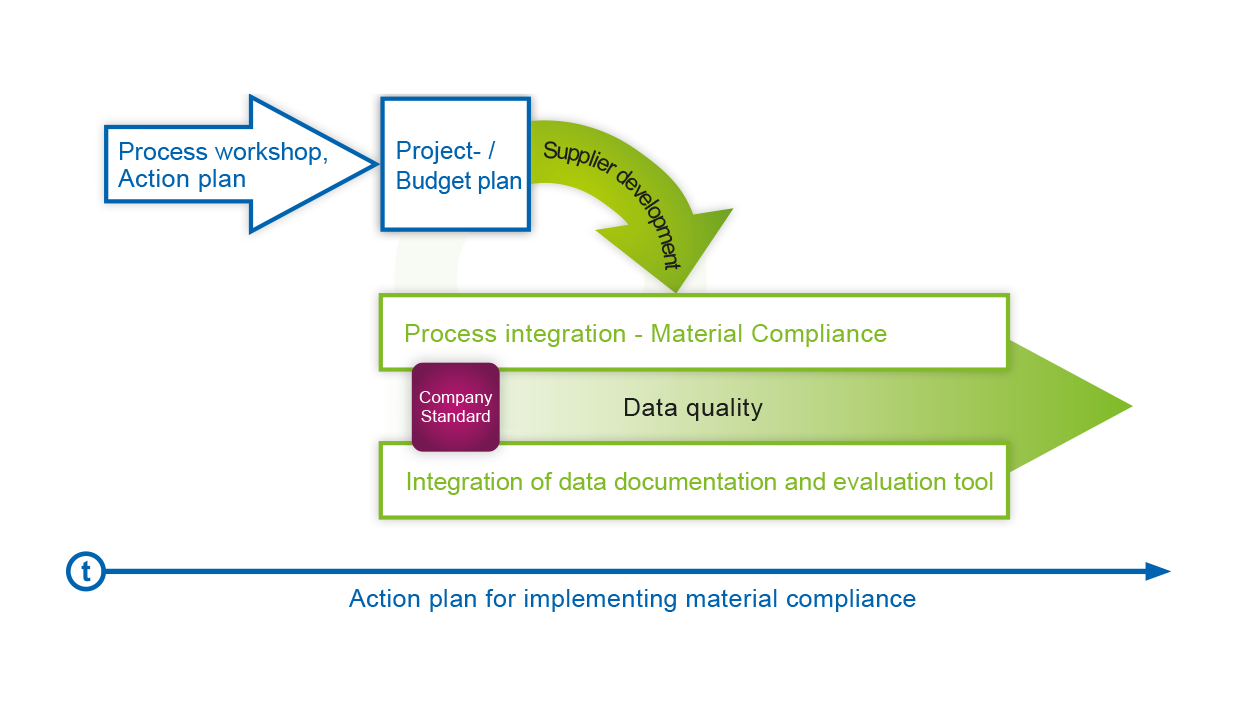
To ensure a structured approach, each project typically starts with an interdisciplinary process workshop. The goal is to embed the implementation of MC requirements across departments and to establish a shared understanding of roles, responsibilities, and interfaces from the very beginning. Material compliance is a cross-functional issue that can only be effectively implemented in the long term if all relevant functions are involved early on and understand the MC process as an integral part of product quality.
During customer-specific individual workshops, the various business units independently defined the interfaces at which the MC requirements can be optimally implemented. Dealing with missing information, so-called non-compliance cases, or the presence of regulated substances proved particularly challenging. A balanced approach was necessary: overly strict guidelines would have made internal processes unnecessarily complicated, while overly flexible regulations could have reduced the importance of the topic.
At the end of the week-long workshop, not only were specific process adjustments defined, but also clearly defined responsibilities and a coordinated plan for resources and actions. This plan was submitted to management for approval and included, in particular, the following key points:
- Appointment and role definition of an MC representative
- Confirmation of the MC implementation process
- Approval of internal and external resources
- Definition of MC specifications and contract terms
Since the management of AST (Advanced Sensor Technologies) International GmbH considers implementation important not only as a legal obligation but, above all, as part of the company’s corporate identity, the decision was made quickly to proceed with the next steps directly in accordance with the implementation concept proposed by tec4U-Solutions.
Step 3: Continuous Supplier Communication to Request Material Declarations in the Supply Chain
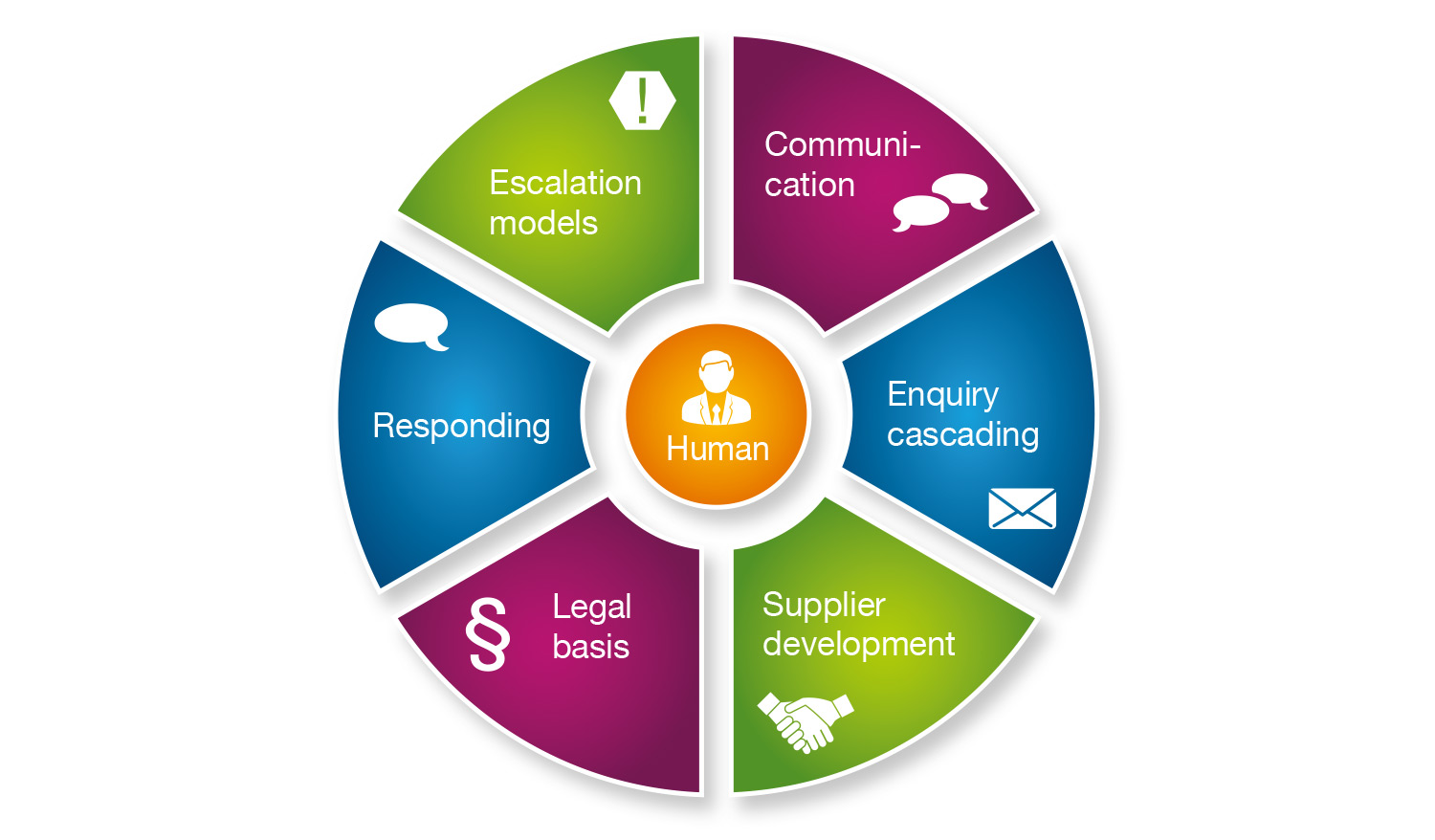
In addition to integrating material compliance into business processes and implementing sustainability software, establishing structured supplier communication presented the next major challenge. The requirements of DIN EN IEC 63000 call for both product-specific inquiries to suppliers and an assessment of their credibility. It quickly became clear to AST that its internal resources—whether in terms of personnel, technology, or time—were insufficient to implement the communication process independently, in a legally compliant and cost-effective manner. This was one of the reasons why tec4U-Solutions GmbH took over the entire data service, which encompassed both operational communication with suppliers and the research, validation, and maintenance of material data.
Starting with a kick-off meeting, the relevant personnel from AST (Advanced Sensor Technologies) International GmbH—who are responsible for implementing material compliance requirements—met with the contact person from tec4U-Solutions, who comprehensively manages supplier communication and project coordination. The focus was on the supplier and product data that had already been provided, as well as on coordinating the communication process among all parties involved. The successful collaboration between the two parties became evident after just a few months: The material compliance (MC) of the suppliers’ products was reliably confirmed, enabling the first compliance certificates to be issued to customers.
The result: Long-term integration and measurable success in product-related sustainability within the company
To permanently integrate material compliance into business processes, process triggers and information flows were defined. Six months after the project launch, the results were revalidated in department-specific workshops. During this process, the procedure was further refined and tightened. Where necessary, missing information was verified through systematic risk assessments or supplementary chemical analyses.
Three years after implementation, the results are clear:
- Material compliance has been successfully integrated as a product feature into all business processes.
- An MC representative ensures ongoing accountability and coordination.
- Supplier acceptance of the DataCross software application is high, supported by awareness-raising efforts and collaborative communication.
- Expert external support facilitated internal implementation and conserved resources.
- The optional outsourcing of supplier communication to tec4U-Solutions GmbH contributed significantly to the project’s success.
- The right to have a say in system development and optimization approaches enables flexible adaptation of the DataCross sustainability software to customer-specific requirements.
Implementing material compliance may seem complex at first. However, it has become clear that with a structured approach, suitable software solutions, and expert support, these requirements can be addressed in a legally compliant, resource-efficient, and cost-effective manner—and as an integral part of product quality.
About AST International: https://www.ast-international.com

Dominik Nieser, Master of Business Administration (M.A.)
Dominik Nieser is Chief Operating Officer (COO) and a member of the executive board at tec4U-Solutions GmbH.
Together with Stefan Nieser (CEO), he leads the company and is responsible for the Data Services, Administration, and Human Resources divisions.
In this role, he plays a key role in shaping the company’s strategic development.
In addition, he is responsible for maintaining and expanding existing customer relationships.
With his focus on long-term partnerships, he ensures a trusting and sustainable collaboration with existing customers.
Fabian Seydt, Senior Quality Engineer
Fabian Seydt works as a Senior Quality Engineer at AST International GmbH and, in his role as Supplier Manager, is responsible for material compliance issues throughout the supply chain. In this capacity, he oversees the expansion and further development of the material compliance process and coordinates collaboration between internal departments, customers, and suppliers.
His focus is on efficient processes, sustainable solutions, and collaborative partnerships to implement material compliance requirements reliably and in a practical manner.